Keysight and Cohere Technologies lead with lab emulation of how multiple drones sense and communicate, a test that is hard to run in the field. Also in the briefing: a dry alternative to ultrasound gel from MIT and new automotive TSN switches from Microchip.
Keysight and Cohere test multi-UAV 6G sensing in a lab emulator
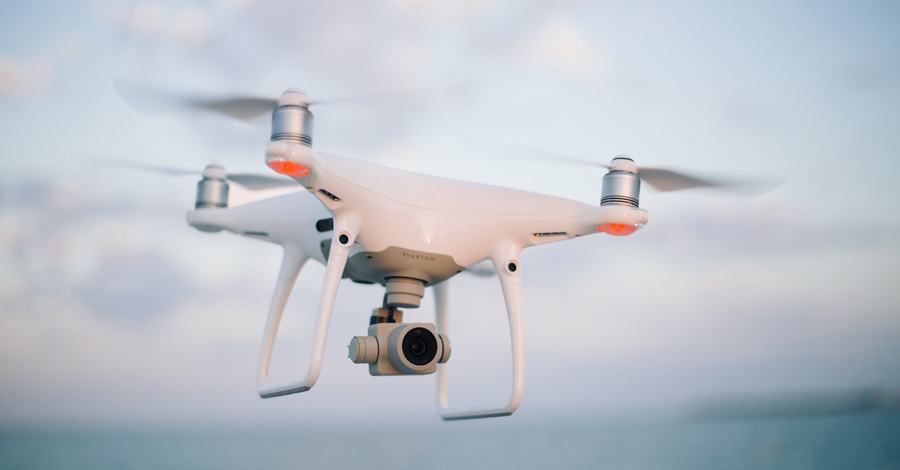
Keysight Technologies announced a broader set of integrated sensing and communications (ISAC) emulation features, along with joint work with Cohere Technologies. Together they will check how multiple unmanned aerial vehicles sense and communicate, using Cohere's Zak-OTFS waveforms. Keysight's solution brings PROPSIM real-time RF channel emulation together with modeling tied to specific sites and automated test workflows. The company says that when many drones fly in close proximity they create quickly shifting, high-Doppler radio conditions with numerous closely spaced moving targets, which are hard and expensive to validate in the field. Keysight says research teams, chipset developers and network equipment manufacturers can test sooner and reduce field-test risk.
Why it matters: Repeatable emulation of dynamic RF scenarios lets teams check algorithms against controlled conditions, which could narrow the gap between simulated channel models and costly field campaigns.
Source: Engineering.com — Keysight and Cohere validate multi-UAV sensing for 6G
MIT team develops dry, stretchy alternative to ultrasound gel
Engineers at MIT and the SMART WITEC project report in Science a dry, stretchy material that could replace wet gel in ultrasound imaging. Earlier wearable patches relied on hydrogel, which can lose its ability to transmit sound within a day or two. The new material uses a bottlebrush polymer structure to cut friction between polymer chains without any liquid or lubricant. Early samples were soft and crumbly, so the team fused in a second, loosely connected bottlebrush network for reinforcement. In experiments, a wearable device using the material produced clear, continuous images over nine days, including during vigorous exercise. A key-fob-sized patch on a volunteer's neck was also tested during a 30-minute bike ride.
Why it matters: For anyone modelling or validating wearable sensors, the coupling interface is a durability variable in its own right, and a stable dry layer changes what long-duration test protocols can look like.
Source: MIT News — Ultrasound imaging without the gel
Microchip samples LAN932xx automotive TSN switch families
Microchip Technology has begun limited sampling of its LAN9324x and LAN9322x automotive Ethernet Time-Sensitive Networking switch families. Together they scale to 18 external ports and up to 30 Gbps of switching capacity. Microchip says the devices carry MACsec on every port and comply with ISO 26262 ASIL B. They are AEC-Q100 Grade 2 qualified, with an ambient range of −40°C to +105°C and a maximum junction temperature of 150°C. The company also highlights runtime reconfiguration, which lets vehicle networks adapt to changing safety, security and resource needs. Management uses standards-based YANG data models and CORECONF through the VelocityDRIVE Software Platform. Evaluation boards and reference designs support development.
Why it matters: Switches that can be reconfigured at runtime enlarge the set of network states that simulation and hardware-in-the-loop testing of zonal architectures would need to cover.
Source: Engineering.com — Microchip samples TSN switches for next-generation vehicle networks