GM engineers did about 80% of the passive safety work on the 2027 Silverado 1500 digitally, and the other stories look at prediction, measurement and manufacturing tools. They cover a materials-property model, a field data recorder and sintered lunar-simulant blocks.
GM did about 80% of Silverado 1500 safety engineering virtually
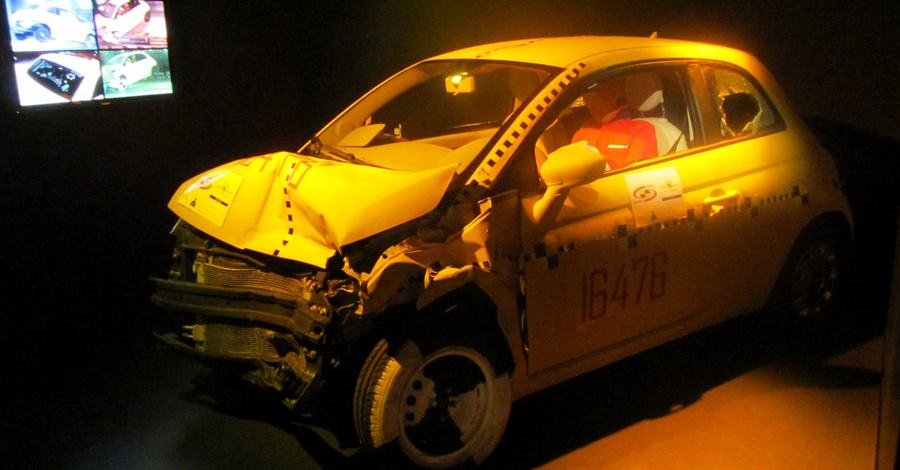
According to Automotive Testing Technology International, General Motors safety engineers carried out roughly 80% of the passive safety work on the 2027 Chevrolet Silverado 1500 digitally, which the publication puts at approximately 92,000 virtual evaluations. The article describes a physical 40% frontal overlap test at 40mph (64km/h), with a 50th percentile male dummy in the driver's seat and a 5th percentile female dummy behind it. It says physical crash testing is still very important, but the emphasis has moved to virtual engineering, enabled by CAD, CAE and simulation, with much of the work done before real-world tests.
Why it matters: A split like this shows how much weight design decisions can place on model credibility. It raises the stakes for correlating simulation against the physical tests that remain.
Tokyo team cuts materials-prediction error by 68% outside training data
Researchers at the Institute of Industrial Science, The University of Tokyo, report a machine-learning approach, decoupled transfer learning, that predicts material properties beyond the range of its training data. Pretrained graph neural networks extract structural information, and a simple regression model then predicts the property. Trained on Materials Project data up to 2018 and tested on materials added through 2021, it cut error by 68% against the CGCNN graph neural network. The team says it works best when new materials extend familiar patterns and is less reliable for poorly represented chemical or electronic regimes. The work appears in PRX Intelligence.
Why it matters: Surrogate and data-driven models are most often questioned exactly where they are extrapolating. Testing on a time-ordered split, and knowing where a model stops being trustworthy, is a useful habit for any validation plan.
IST launches battery-powered 15-channel recorder for shock and vibration
Instrumented Sensor Technology (IST) has released the EDR-15 FieldDAQ, a ruggedized logger aimed at flight-test campaigns, structural measurements on aircraft and defense instrumentation. IST states that its rechargeable battery keeps it recording for over seven days, with no mains supply and no computer attached. The 15 channels work with IEPE transducers and are grouped into five synchronized three-channel acquisition engines. Quoted figures include up to 50,000 samples per second per channel, 16-bit acquisition and 160GB of onboard storage. Users pull the data over USB into IST's DynaMax software, which includes PSD and SRS functions. Several units can also be interconnected.
Why it matters: Long unattended records from many locations give analysts more measured data against which to check vibration and shock models. The usual questions about channel count, sampling and synchronization still apply when planning a campaign.
Source: Aerospace Testing International — IST launches 15-channel field recorder for aerospace testing
Arkansas team sinters lunar-simulant bricks with no binder
A University of Arkansas group led by assistant professor Wan Shou used laser powder bed fusion on LHS-1 lunar regolith simulant, producing interlocking blocks without any added binder. The researchers say nobody had previously shown such blocks made by sintering the material alone and designed to be reconfigured. The pieces, a cross and an H, are a few centimeters across. Compared with binder-based prints, pure-regolith parts contain more internal pores and are weaker. First author Cole McCallum said the blocks can support themselves but are not yet suited to carrying other loads. How the process behaves in vacuum and microgravity remains to be studied. The work appears in npj Advanced Manufacturing.
Why it matters: Porosity and the lack of load-bearing data mean any structural modelling of such parts would need properties measured directly on the sintered material. Untested vacuum and microgravity behaviour is another open input.
Source: 3D Printing Industry — 3D Printed Bricks That Snap Together for Lunar Bases